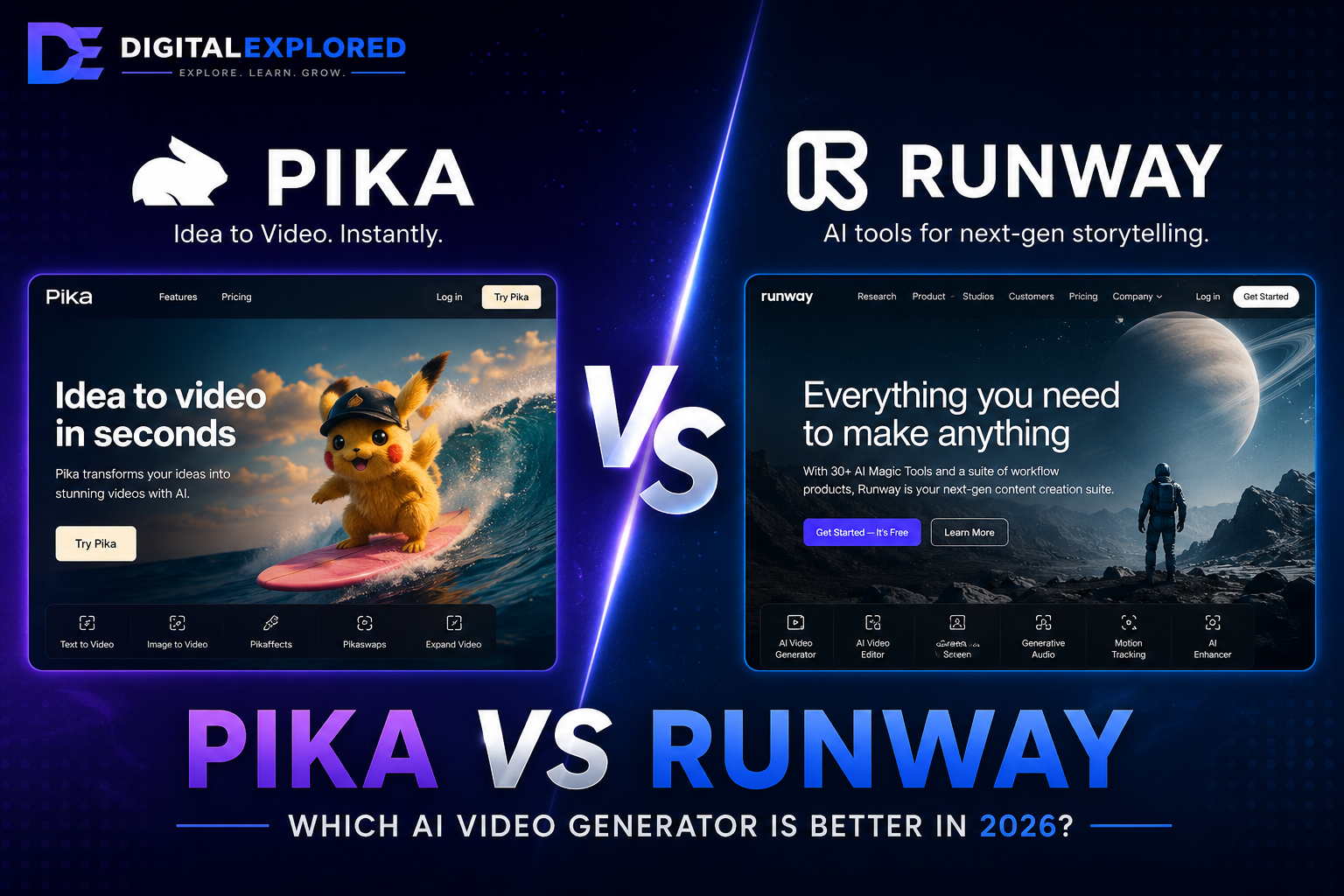
Choosing between Pika vs Runway? It isn’t simply a matter of deciding which AI video generator is “better.” Both platforms are among the strongest options on the market, but they were built with different creators in mind and excel in different areas.
Pika is designed for fast, creative video generation with an emphasis on social media content, beginner-friendly workflows, and unique AI effects. It’s ideal for creators who want to transform ideas into engaging videos with as little friction as possible.
Runway takes a broader approach. Rather than focusing solely on AI video generation, it combines generative AI with professional editing tools, collaboration features, and production workflows that make it suitable for agencies, filmmakers, and commercial teams.
That distinction makes choosing the right platform much easier once you understand your own workflow.
If your goal is creating TikTok videos, Instagram Reels, YouTube Shorts, or eye-catching marketing content, Pika’s speed and simplicity will likely appeal to you.
If you’re producing client work, commercial campaigns, documentaries, or larger creative projects, Runway’s more comprehensive toolkit can easily justify its steeper learning curve.
In this detailed comparison, we’ll evaluate Pika vs Runway across the factors that matter most, including:
- AI video quality
- Ease of use
- Features
- Editing capabilities
- Pricing
- Real-world performance
- Commercial usage
- Best use cases
- Pros and cons
- Which platform offers the best overall value
By the end of this comparison, you should have a clear understanding of which AI video generator fits your needs.
Table of Contents
Pika vs Runway at a Glance
| Category | Pika | Runway |
| Best For | Social media creators, beginners, marketers | Professional creators, agencies, filmmakers |
| AI Video Generation | Excellent | Excellent |
| AI Video Editing | Basic | Advanced |
| Image-to-Video | Yes | Yes |
| Text-to-Video | Yes | Yes |
| Video-to-Video | Limited | Yes |
| Creative AI Effects | Extensive | More limited |
| Team Collaboration | Limited | Yes |
| Learning Curve | Easy | Moderate |
| Workflow Focus | Social-first | Professional production |
| Free Plan | Yes | Yes |
| Commercial Use | Supported | Supported (plan dependent) |
Neither platform wins every category.
Instead, they solve different problems.
Pika focuses on accessibility, speed, and creative experimentation. Features such as Pikaffects, Pikaswaps, and Pikadditions make advanced visual transformations approachable even for users with no editing experience.
Runway is built around a much broader creative ecosystem. Alongside AI video generation, it includes editing, collaboration, asset management, and production tools that support projects from concept through final export.
For many users, the decision isn’t about which platform is objectively superior—it’s about which workflow better matches the type of content they create.
The Quick Verdict
If you simply want the recommendation without reading the entire comparison, here’s the short version.
Choose Pika If…
- You mainly create TikTok, Instagram Reels, or YouTube Shorts.
- You want impressive AI effects with minimal effort.
- You prefer a clean, beginner-friendly interface.
- Image-to-video generation is one of your primary workflows.
- You regularly produce social media content or marketing hooks.
- You want a lower-cost way to experiment with AI video generation.
Pika performs exceptionally well when speed, creativity, and ease of use matter more than professional production features.
Choose Runway If…
- You create videos professionally.
- You need AI editing alongside AI generation.
- You work with clients or creative teams.
- You produce commercial marketing campaigns.
- You want a complete production workflow inside one platform.
- You expect your creative needs to grow over time.
Runway is the better choice for creators who view AI as one part of a larger production pipeline rather than a standalone content generator.
What Are Pika and Runway?
Although they’re frequently compared as AI video generators, Pika and Runway were developed with very different goals in mind.
Understanding those differences makes the rest of this comparison much easier to follow.
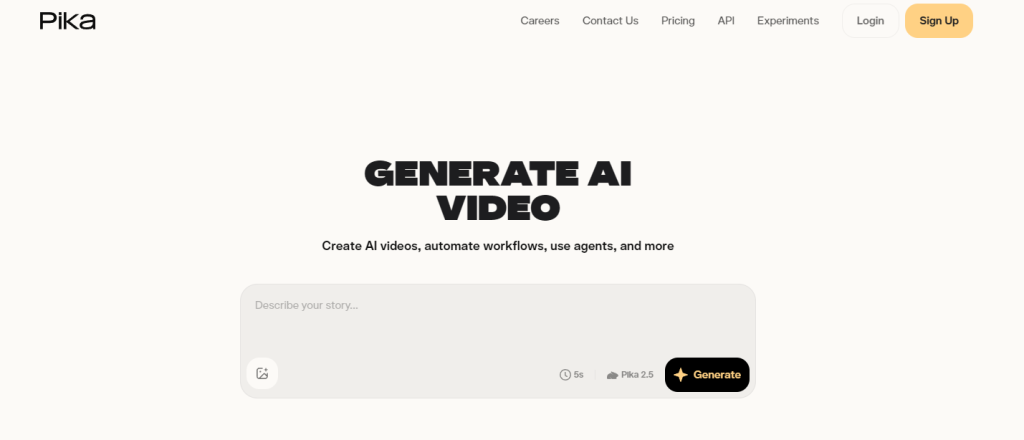
What Is Pika?
Pika is a cloud-based AI video generation platform designed to make creating engaging short-form videos as simple as possible.
Rather than expecting users to understand traditional editing techniques, Pika focuses on intuitive AI-powered tools that let creators generate or transform videos using text prompts, images, existing footage, and other media.
Some of its core capabilities include:
- Text-to-video generation
- Image-to-video animation
- Object replacement
- Character insertion
- Stylized visual effects
- Audio-driven performances
- Reference-based generation
- AI-powered creative agents
One of Pika’s biggest differentiators is its collection of branded tools, including Pikaffects, Pikadditions, Pikaswaps, Pikatwists, and Pikaframes.
Instead of relying entirely on prompt engineering, these tools simplify specific creative tasks and make advanced effects accessible to beginners.
As a result, Pika has become especially popular among content creators, marketers, entrepreneurs, and anyone focused on producing engaging social media videos quickly.
If you’d like a more in-depth look at the platform, read our Pika Review.
What Is Runway?
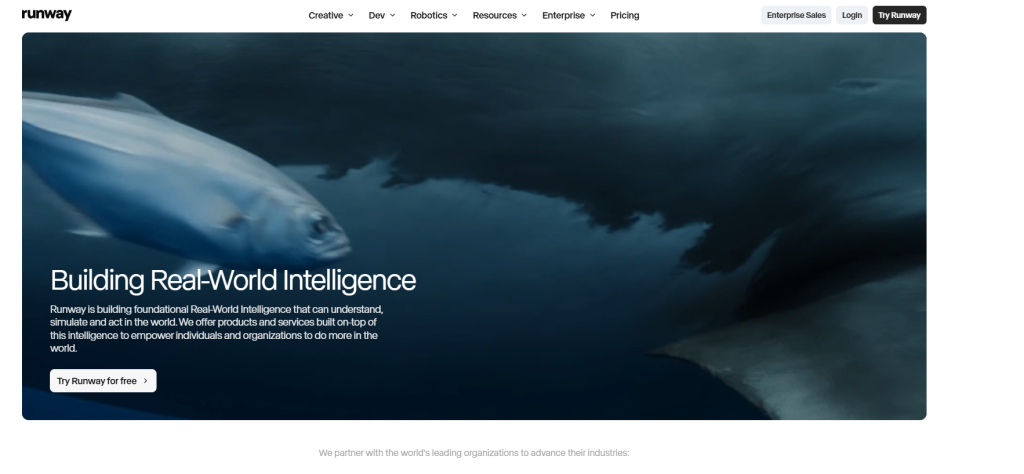
Runway is a browser-based AI creative platform that combines video generation with professional editing, visual effects, collaboration, and project management.
Rather than functioning solely as an AI video generator, Runway aims to support a much larger portion of the production process within a single workspace.
For a complete breakdown of its features and pricing, see our Runway Review.
Its feature set includes:
- Text-to-video generation
- Image-to-video generation
- Video-to-video transformation
- AI image generation
- Background removal
- Object removal
- Motion tracking
- AI masking
- Video expansion
- Subtitle generation
- AI-assisted editing
- Team collaboration
- Cloud-based project management
This broader toolkit makes Runway particularly attractive to filmmakers, agencies, production teams, marketers, and businesses that need more than just AI-generated video clips.
AI Video Quality Comparison
For most people, video quality is ultimately what determines which platform is worth paying for.
Both Pika and Runway are capable of producing impressive AI-generated videos, but they prioritize different outcomes.
Pika focuses on visually striking, highly engaging content that’s designed to perform well on social media.
Runway, by contrast, emphasizes realism, cinematic movement, and production-ready results.
Let’s compare how they perform across the areas that matter most.
Text-to-Video Quality
Both platforms allow you to generate videos from natural-language prompts, but the experience isn’t identical.
Pika’s text-to-video workflow is built around speed and experimentation. It performs especially well with:
- Stylized animations
- Promotional clips
- Surreal concepts
- Social media hooks
- Short-form visual ideas
Because the platform is designed around relatively short outputs, it feels well suited to creators who want to test several concepts quickly without getting buried in technical controls.
Runway takes a more production-oriented approach.
Its text-to-video models generally aim for:
- More realistic movement
- Stronger cinematic composition
- Smoother camera motion
- Greater visual consistency
- Better integration with editing workflows
That makes Runway more appealing to filmmakers, agencies, and creators producing polished commercial content.
Pika is often more fun to experiment with, but Runway usually delivers the stronger result when realism and professional presentation matter most.
Winner: Runway
Image-to-Video Quality
Image-to-video is one of the strongest features on both platforms.
Pika makes it particularly easy to animate:
- Product photos
- Portraits
- Illustrations
- Brand assets
- Social media graphics
- Existing marketing creatives
Its workflow feels fast and approachable. You upload an image, describe the movement you want, and generate a short animated clip without needing any technical editing knowledge.
This makes Pika especially useful for ecommerce brands, marketers, and creators who already have strong visual assets but want to make them more engaging.
Runway also offers excellent image-to-video generation, although its implementation feels more connected to a larger production environment.
That added flexibility is useful when the generated clip will become part of a more complex project. For users simply trying to animate an image as quickly as possible, however, Pika generally feels more direct.
Winner: Pika
Motion Quality
Motion quality is where the difference between the two platforms becomes more noticeable.
Runway generally produces:
- Smoother camera movement
- More natural object motion
- Better pacing
- Stronger physical realism
- More convincing cinematic sequences
Its models are clearly designed with polished production in mind.
Pika can still produce attractive motion, but its clips often feel more suited to short-form content where visual impact matters more than perfect realism.
That isn’t necessarily a weakness.
On TikTok, Instagram Reels, or YouTube Shorts, viewers are unlikely to analyse whether every movement follows realistic physics. They care more about whether the clip is surprising, engaging, or visually memorable.
For narrative scenes, advertisements, or more demanding creative projects, Runway usually delivers the more polished result.
Winner: Runway
Character Consistency
Character consistency remains one of the biggest challenges in AI video generation.
Neither platform solves it perfectly.
Pika’s reference-based tools allow creators to upload people, products, and visual references before generating a video. That can help maintain a more recognizable appearance across related clips than relying on text prompts alone.
This is particularly useful when working with:
- Recurring characters
- Brand mascots
- Product campaigns
- Consistent visual identities
- Series-based social content
Runway continues to improve character consistency across its newer models, but changes in facial features, clothing, lighting, and scene details can still appear between generations.
For creators who rely heavily on visual references, Pika currently offers the more approachable workflow.
Winner: Pika
Prompt Adherence
Prompt adherence measures how closely the generated video follows your written instructions.
Neither platform produces perfect results every time.
Pika can occasionally:
- Ignore requested actions
- Alter the subject unexpectedly
- Miss important visual details
- Introduce unwanted motion
- Change the scene composition
Runway can make similar mistakes, but it generally handles detailed, production-focused prompts more reliably.
That becomes especially important when you’re working on client projects or marketing campaigns where the result needs to match a specific brief.
Regardless of which platform you choose, expect to refine your prompts and regenerate clips before reaching a final result.
Winner: Runway
Creative Effects
This is where Pika clearly separates itself from Runway.
Rather than relying entirely on written prompts, Pika includes a collection of dedicated creative tools, including:
- Pikaffects
- Pikadditions
- Pikaswaps
- Pikatwists
- Pikascenes
- Pikaformance
These features let users perform specific transformations without learning advanced editing techniques or writing complicated prompts.
For example, creators can:
- Replace objects
- Add characters
- Generate surreal effects
- Animate expressive performances
- Create alternative outcomes
- Transform ordinary footage into attention-grabbing content
Runway certainly offers powerful creative tools, but they’re designed around a broader editing and production workflow rather than quick, playful transformations.
For creators making viral clips, memes, social advertisements, or experimental content, Pika’s creative toolkit is more distinctive.
Winner: Pika
Overall Video Quality Verdict
Runway produces the stronger overall video quality when realism, motion, and professional presentation are the priorities.
Pika is more impressive when the goal is fast, creative, social-first content.
If you’re considering either platform individually, our Pika Review and Runway Review cover each tool in much greater detail.
The difference comes down to what you value most:
- Choose Runway for cinematic and production-oriented output.
- Choose Pika for stylized, imaginative, and attention-grabbing videos.
Ease of Use
Both platforms are easier to learn than traditional video-editing software, but they approach usability differently.
Pika tries to remove as much complexity as possible.
Runway tries to provide more creative control without overwhelming users.
That means the better experience depends largely on your skill level and how much flexibility you need.
Pika’s User Experience
Pika is one of the easiest AI video generators to start using.
Most tools are organized around clear actions rather than technical editing terminology.
Instead of expecting users to understand masking, compositing, or timeline-based workflows, Pika presents straightforward options such as:
- Add
- Swap
- Twist
- Animate
- Apply effects
This dramatically lowers the barrier to entry.
New users can begin producing visually interesting results within minutes, even if they have no previous experience with AI video or editing software.
The interface is clearly optimized for:
- Fast iteration
- Minimal setup
- Short generation workflows
- Visual experimentation
- Social media content
For creators who want to move from idea to finished clip as quickly as possible, Pika’s simplicity is a major advantage.
Runway’s User Experience
Runway is still approachable, but its broader feature set naturally makes the interface more complex.
Alongside AI generation, users can access:
- Editing tools
- Project management
- Collaboration features
- AI masking
- Motion tracking
- Object removal
- Subtitle generation
- Multiple generative models
That creates a steeper learning curve than Pika, but it also gives experienced creators much more flexibility.
A professional user will likely appreciate being able to generate, edit, refine, and organize projects without leaving the platform.
For someone who only wants to create quick social videos, however, many of those additional features may feel unnecessary.
Ease of Use Verdict
Pika is the easier platform to learn.
Its interface is simpler, its workflows are more focused, and its creative tools require very little technical knowledge.
Runway takes longer to master, but the additional complexity becomes worthwhile for users who need a more complete production environment.
Winner: Pika
Feature Comparison
Although Pika and Runway are both AI video generators, their feature sets reflect two very different philosophies.
Pika focuses on making creative transformations fast and accessible through purpose-built AI tools.
Runway provides a broader collection of AI-powered editing and production features designed to support complete creative workflows.
Let’s compare the areas where they differ the most.
Text-to-Video
Text-to-video is one of the core features offered by both platforms.
Pika allows users to describe a scene in plain language and quickly generate short AI videos. The experience is optimized for speed and experimentation, making it easy to create engaging content for social media, marketing campaigns, and quick creative concepts.
Runway also delivers high-quality text-to-video generation, but its approach is more cinematic. Generated clips integrate naturally into the rest of Runway’s editing environment, making it easier to continue refining projects without switching platforms.
In practice, both tools produce excellent results.
Your choice depends more on your workflow than on the quality of the technology itself.
Winner: Draw
Image-to-Video
Image animation has become one of the most popular AI video workflows, and both platforms perform well.
Pika allows users to animate:
- Product photography
- Portraits
- Artwork
- Brand assets
- Marketing graphics
- Existing visual content
Its interface keeps the process simple, making image animation accessible even for users with no editing experience.
Runway also supports image-to-video generation, but it treats the generated clip as part of a larger creative project rather than a standalone asset.
If your primary objective is quickly animating existing images, Pika offers the smoother experience.
Winner: Slight edge to Pika
Video Editing
This is one of the biggest differences between the two platforms.
Pika includes AI-powered transformation tools that let users:
- Replace objects
- Add new elements
- Modify scenes
- Apply visual effects
- Transform existing videos
While useful, these features aren’t intended to replace professional editing software.
Runway goes much further.
Its editing environment includes:
- Object removal
- Background removal
- Motion tracking
- AI masking
- Subtitle generation
- Video expansion
- AI-assisted editing
- Project organization
Rather than focusing solely on generation, Runway supports creators throughout the production process.
For anyone working on professional projects, the additional editing capabilities are difficult to ignore.
Winner: Runway
AI Creative Effects
Creative effects are one of Pika’s biggest competitive advantages.
Instead of asking users to write increasingly complicated prompts, the platform includes specialized tools designed around common creative tasks.
These include:
Pikaffects
Generate stylized transformations such as melting, exploding, crushing, inflating, or turning objects into entirely different materials.
Pikadditions
Insert new people, products, or objects into existing footage using AI.
Pikaswaps
Replace one object with another without requiring manual editing or masking.
Pikatwists
Generate alternative versions or unexpected endings for existing clips.
Pikascenes
Combine multiple uploaded references into entirely new AI-generated scenes.
Pikaformance
Create expressive, audio-driven performances synchronized to speech or music.
These features dramatically simplify workflows that would otherwise require advanced compositing or visual-effects software.
Runway certainly includes creative editing capabilities, but they’re designed more for professional production than playful experimentation.
If your goal is producing memorable, viral social content, Pika offers the more distinctive toolkit.
Winner: Pika
AI Editing Tools
Runway clearly leads when it comes to AI-assisted editing.
Its toolkit includes features such as:
- Background removal
- Object removal
- Motion tracking
- Automatic masking
- Frame interpolation
- Video outpainting
- Camera motion controls
- Subtitle generation
These tools allow creators to refine generated content without constantly moving between multiple applications.
Pika remains focused primarily on generation and creative transformations rather than full-scale editing.
If editing is a major part of your workflow, Runway offers significantly more flexibility.
Winner: Runway
Collaboration Features
Professional creative work often involves multiple people.
This is another area where Runway has a clear advantage.
The platform includes shared workspaces and cloud-based project management, allowing agencies and creative teams to organize assets, review edits, and collaborate throughout the production process.
Pika is primarily designed for individual creators and doesn’t currently place the same emphasis on collaborative workflows.
Solo creators are unlikely to miss these features, but businesses and agencies probably will.
Winner: Runway
Automation and AI Agents
Both companies continue investing heavily in AI-powered automation.
Pika has expanded beyond video generation by introducing tools such as:
- Pika Agent
- Pika MCP
- API access through Fal.ai
These additions make the platform increasingly attractive for developers and businesses looking to automate parts of their content creation pipeline.
Runway also supports enterprise workflows, but its current focus remains on professional production rather than conversational AI agents or automated generation pipelines.
If automation is a priority, Pika currently offers a slight advantage.
Winner: Slight edge to Pika
Overall Feature Verdict
Neither platform dominates every category.
Instead, each excels in different areas.
Choose Pika if you value:
- Creative AI effects
- Fast content generation
- Image animation
- Simplicity
- Automation features
Choose Runway if you need:
- Professional editing
- Collaboration tools
- Production workflows
- Advanced AI-assisted editing
- Project management
For most beginners, Pika’s focused feature set will feel easier to use.
For professional creators, Runway’s broader ecosystem offers significantly more long-term value.
Pricing Comparison

Pricing is another important consideration, especially if you plan to generate videos regularly.
Both Pika and Runway use subscription plans combined with credit-based AI generation.
That means the number of videos you can create depends not only on your monthly subscription but also on how many credits each generation consumes.
Understanding how those credits work is often more important than simply comparing monthly prices.
Pika Pricing
At the time of writing, Pika offers four publicly available subscription tiers:
| Plan | Annual Price | Best For |
| Basic | Free | Trying the platform |
| Standard | $8/month | Regular creators |
| Pro | $28/month | Heavy users |
| Fancy | $76/month | Businesses and professionals |
Even the free plan includes watermark-free downloads and commercial use, although the available monthly credits are intentionally limited.
Moving up the paid plans unlocks:
- More generation credits
- Faster processing
- Higher export resolutions
- Access to premium features
- Increased generation limits
For hobbyists and creators publishing regularly on social media, Pika’s pricing is among the most accessible in the AI video space.
Runway Pricing
Runway also offers a free plan alongside several paid subscription tiers.
Rather than charging a flat monthly fee for unlimited AI generation, Runway—like Pika—uses a credit-based system. Your monthly allowance depends on the plan you choose, while the number of credits consumed varies based on the task you’re performing.
Higher-tier plans generally include:
- More monthly AI credits
- Access to the latest AI models
- Higher generation limits
- Faster processing
- Improved export capabilities
- Team collaboration features
- Priority access during busy periods
Runway also offers enterprise pricing for larger organizations that require custom workflows, advanced collaboration, or dedicated support.
Because AI models evolve rapidly, it’s always worth checking the latest pricing before subscribing, as both features and plan structures can change over time.
Which Offers Better Value?
The answer depends entirely on how you intend to use the platform.
If you’re a hobbyist, solo creator, or marketer producing short-form content, Pika delivers excellent value.
Its entry-level paid plan is affordable while still unlocking the features most users actually need.
Runway becomes easier to justify once you’re creating videos professionally.
The additional editing tools, project management capabilities, and collaborative workflow help offset the higher subscription cost by reducing the need for other software.
Winner
- Pika for beginners, marketers, entrepreneurs, and social media creators.
- Runway for agencies, businesses, filmmakers, and professional production teams.
Performance in Real-World Use
Feature lists only tell part of the story.
The real question is what it’s actually like to use each platform every day.
Generation speed, reliability, prompt accuracy, and credit efficiency all have a major impact on the overall experience.
Although both platforms perform well, they shine in different situations.
Generation Speed
Both Pika and Runway generate videos in the cloud.
That means generation times depend on several variables, including:
- Server demand
- Your subscription tier
- The AI model you’re using
- Video duration
- Output resolution
Neither company guarantees identical generation speeds for every request.
Runway generally prioritizes quality and stability over rapid experimentation. During periods of heavy demand, users occasionally experience longer processing queues, particularly when using the newest AI models.
Pika is optimized around producing short clips quickly, making it feel especially responsive when brainstorming multiple ideas or creating social content.
Even so, queue times can still occur during busy periods, particularly on the free plan.
For most creators, both platforms are fast enough for everyday use.
Neither completely avoids the delays that come with cloud-based AI generation.
Winner: Draw
Credit Efficiency
One of the biggest hidden costs of AI video generation isn’t the subscription price.
It’s the number of credits required before you finally generate a clip you’re happy with.
Both Pika and Runway charge credits every time you generate content.
That means unsuccessful attempts still consume part of your monthly allowance.
Pika
Credit usage depends on several factors, including:
- Resolution
- Video length
- Selected model
- Feature used
- Effect complexity
Longer clips and premium features consume noticeably more credits than short drafts.
Specialized tools such as Pikaframes can also become relatively expensive when producing extended sequences.
Runway
Runway also bases credit consumption on:
- AI model
- Resolution
- Video duration
- Generation complexity
More advanced models generally require more credits than older ones.
In practice, the true cost of producing a finished video often depends less on the advertised pricing and more on how many generations are required before achieving the desired result.
Neither platform completely eliminates that challenge.
Winner: Draw
Reliability
AI video generation has improved dramatically over the last few years.
Even so, neither platform produces perfect results every time.
Occasionally you’ll encounter:
- Distorted faces
- Objects changing shape
- Missing prompt details
- Unexpected camera movement
- Character inconsistencies
Runway users most commonly mention:
- Credit consumption
- Prompt sensitivity
- Waiting times
- Subscription costs
- Character consistency
Despite these issues, many creators still consider Runway one of the most dependable AI production environments available today.
Pika users most frequently report:
- Prompt adherence issues
- Variable output quality
- Customer support delays
- Billing frustrations
- Credit usage
- Queue times
At the same time, Pika consistently receives praise for its creativity, ease of use, and image-to-video capabilities.
For commercial work where reliability is especially important, Runway currently inspires slightly more confidence.
Winner: Runway
Best Use Cases
Rather than asking which platform is universally better, it’s more useful to ask which one best fits the type of content you create.
Best for Beginners
If you’re completely new to AI video generation, Pika is the easier recommendation.
Its streamlined interface, faster workflows, and creative tools make it simple to produce impressive-looking videos without spending hours learning the platform.
Winner: Pika
Best for Content Creators
Both platforms work well for creators, but they appeal to different audiences.
Choose Pika if you mainly create:
- TikTok videos
- Instagram Reels
- YouTube Shorts
- Viral social clips
- Marketing hooks
Choose Runway if you produce:
- Long-form YouTube videos
- Commercial content
- Branded campaigns
- Documentary-style videos
- Professional storytelling
Neither platform dominates this category because they serve different creative needs.
Winner: Draw
Best for Businesses
Businesses often need more than attractive AI-generated videos.
They also need:
- Team collaboration
- Organized workflows
- Editing tools
- Asset management
- Repeatable production systems
Runway includes these capabilities within a single browser-based platform, making it a stronger choice for agencies, startups, and internal marketing teams.
Pika certainly has business applications, particularly for marketing teams creating promotional content, but it remains focused primarily on fast content generation.
Winner: Runway
Best for Social Media
This is where Pika has a clear advantage.
The platform was built with short-form content in mind and excels at helping creators produce videos that grab attention quickly.
Its strengths include:
- Short-form video creation
- Creative AI effects
- Trend-based content
- Viral-style transformations
- Image animation
- Fast iteration
For creators publishing regularly on TikTok, Instagram Reels, Facebook Reels, or YouTube Shorts, Pika’s workflow feels purpose-built.
Runway can absolutely produce social media content, but its broader focus means it isn’t quite as streamlined for rapid, high-volume content creation.
Winner: Pika
Best for Professional Production
Professional creators usually need much more than AI video generation.
They often require:
- Advanced editing
- Organized project management
- Team collaboration
- Asset organization
- Repeatable production workflows
This is exactly where Runway stands out.
Its combination of AI generation and professional editing tools makes it much better suited for commercial work than Pika.
Filmmakers, agencies, creative studios, and experienced content teams will usually benefit more from Runway’s complete production ecosystem.
Winner: Runway
Pros and Cons
No AI video generator is perfect.
Both Pika and Runway have clear strengths, but they also come with limitations that are worth understanding before you subscribe.
Let’s look at each platform individually.
Pika Pros
Extremely Beginner-Friendly
One of Pika’s biggest strengths is how approachable it feels.
Instead of overwhelming new users with professional editing terminology, the platform organizes complex workflows into intuitive tools such as Pikaffects, Pikadditions, and Pikaswaps.
Even if you’ve never edited a video before, you can begin producing impressive results within minutes.
Excellent for Social Media
Pika feels purpose-built for short-form content.
It’s particularly well suited for creating:
- TikTok videos
- Instagram Reels
- YouTube Shorts
- Facebook Reels
- Promotional clips
- Marketing videos
Its creative tools encourage experimentation and make it easy to produce content designed to capture attention quickly.
Outstanding Creative Effects
Few competitors offer a collection of AI creative tools quite like Pika’s.
Features such as:
- Pikaffects
- Pikadditions
- Pikaswaps
- Pikatwists
- Pikaformance
allow creators to perform transformations that would traditionally require advanced visual-effects software.
For users who enjoy experimenting with creative ideas, these tools are one of Pika’s biggest selling points.
Excellent Image-to-Video Workflow
Animating existing images is one of Pika’s strongest capabilities.
Whether you’re working with:
- Product photography
- Portraits
- Illustrations
- Brand assets
- Marketing graphics
the workflow feels quick, intuitive, and beginner-friendly.
Many users find it easier to achieve consistent results with image animation than with text-only prompts.
Affordable Entry Point
Compared with many competing AI video platforms, Pika remains relatively affordable.
Its Standard plan provides access to the majority of the platform’s key features without requiring a large monthly investment.
For creators just entering the AI video space, that’s a significant advantage.
Pika Cons
Limited Professional Editing
Although Pika includes useful AI-powered editing tools, it isn’t designed to replace professional editing software.
Most larger projects will still benefit from applications such as:
- Adobe Premiere Pro
- DaVinci Resolve
- Final Cut Pro
Pika works best as a content generation tool rather than a complete editing environment.
Optimized for Short Videos
Pika’s core workflows revolve around short-form content.
If you’re producing long-form YouTube videos, documentaries, or commercial productions, you’ll usually need to generate multiple clips before combining them in another editor.
Prompt Inconsistency
Like every current AI video generator, Pika doesn’t always interpret prompts perfectly.
Occasionally you’ll encounter:
- Missing scene details
- Altered subjects
- Unexpected movement
- Inconsistent compositions
Generating multiple versions is often necessary before achieving the desired result.
Credit Consumption
Higher resolutions, premium effects, and repeated generations can consume credits surprisingly quickly.
For creators producing large amounts of content every month, subscription costs can increase faster than expected.
Runway Pros
Complete AI Production Platform
Runway offers much more than AI video generation.
Its ecosystem combines:
- AI generation
- AI-assisted editing
- Visual effects
- Project management
- Collaboration
- Asset organization
into a single browser-based workspace.
That makes it one of the most complete AI production environments currently available.
Powerful Editing Features
Compared with Pika, Runway provides a far more comprehensive editing toolkit.
Highlights include:
- Motion tracking
- AI masking
- Background removal
- Object removal
- Subtitle generation
- Video expansion
These tools make it possible to refine AI-generated content without constantly moving between different applications.
Better for Teams
Runway’s collaborative workspace is another major advantage.
Creative agencies, marketing departments, and production teams can work together inside the same environment, helping streamline larger projects.
That functionality simply isn’t a major focus for Pika.
Strong End-to-End Workflow
Many creators appreciate being able to:
Generate → Edit → Refine → Export
without leaving the platform.
This integrated workflow can save considerable time, particularly for professional users managing multiple projects simultaneously.
Continually Improving AI Models
Runway consistently releases improvements to its proprietary AI models.
Each new generation has generally delivered better realism, smoother motion, stronger prompt adherence, and higher overall video quality.
That steady pace of development helps keep the platform competitive in an increasingly crowded AI video market.
Runway Cons
Steeper Learning Curve
Runway is considerably easier to learn than traditional video-editing software, but it’s still more complex than Pika.
As you begin using features such as:
- Motion tracking
- AI masking
- Object removal
- Collaboration tools
- Project management
- Advanced editing
the interface naturally becomes more demanding.
For experienced creators, that extra complexity is worthwhile. For beginners, however, it can feel overwhelming at first.
Credit-Based Pricing Can Add Up
Like Pika, Runway charges credits for many AI generation tasks.
If you’re experimenting heavily or generating multiple versions of the same scene, your monthly credit allowance can disappear faster than expected.
This isn’t unique to Runway—it’s a challenge shared by most AI video platforms—but it’s something worth considering before choosing a plan.
Prompt Quality Still Matters
Even with Runway’s advanced AI models, the quality of your results depends heavily on the quality of your prompts.
It’s common to:
- Rewrite prompts
- Adjust camera instructions
- Refine scene descriptions
- Generate multiple versions
- Combine several outputs
before arriving at the final result.
Runway generally follows prompts better than Pika, but it still isn’t a one-click solution.
It Doesn’t Replace Traditional Editors
Runway includes an impressive editing toolkit, but it shouldn’t be viewed as a complete replacement for professional editing software.
Complex productions often still benefit from applications such as Premiere Pro or DaVinci Resolve for advanced color grading, audio editing, motion graphics, and finishing work.
For most professionals, Runway complements existing editing software rather than replacing it entirely.
Which Platform Should You Choose?
After comparing every major category, one thing becomes clear:
There isn’t a universal winner.
The better platform depends entirely on how you create content.
Choose Pika If…
Pika is the better choice if you:
- Primarily create short-form content.
- Want the easiest platform to learn.
- Enjoy experimenting with creative AI effects.
- Frequently animate images.
- Prefer a lower-cost entry point.
- Don’t need advanced editing capabilities.
For creators focused on speed, creativity, and accessibility, Pika is an excellent option.
Choose Runway If…
Runway is likely the better fit if you:
- Produce videos professionally.
- Need AI-assisted editing.
- Work with clients or creative teams.
- Create commercial marketing campaigns.
- Want an end-to-end production workflow.
- Need collaboration features.
Its broader toolkit makes it a stronger long-term investment for agencies, businesses, and professional creators.
Pika vs Runway: Head-to-Head Comparison
If you’re short on time, this table summarizes the biggest differences between the two platforms.
| Category | Winner | Why |
| Ease of Use | Pika | Simpler interface and faster learning curve |
| Text-to-Video | Runway | More cinematic and realistic output |
| Image-to-Video | Pika | Faster, more intuitive animation workflow |
| AI Editing | Runway | Comprehensive editing toolkit |
| Creative Effects | Pika | Unique AI transformation tools |
| Professional Workflow | Runway | Complete production environment |
| Team Collaboration | Runway | Shared workspaces and project management |
| Social Media Creation | Pika | Optimized for short-form content |
| Business Workflows | Runway | Better suited to agencies and teams |
| Value for Beginners | Pika | Lower barrier to entry |
| Value for Professionals | Runway | More complete long-term solution |
Overall, neither platform dominates every category.
Instead, they excel in different areas and are designed for different types of creators.
Frequently Asked Questions
Is Pika better than Runway?
It depends on what you’re looking for.
Pika is generally the better option if your priority is creating engaging social media videos quickly without spending much time learning the software.
Its beginner-friendly interface and creative AI effects make it particularly attractive for marketers, entrepreneurs, and creators focused on short-form content.
Runway is the stronger choice if you need AI generation alongside editing, collaboration, and production management.
Is Runway better for professional creators?
Yes.
Runway was built with professional workflows in mind.
Its combination of AI video generation, editing tools, motion tracking, collaboration, and project management makes it significantly more suitable for agencies, filmmakers, and commercial production teams.
Which Platform Creates More Realistic Videos?
Runway generally produces the more realistic output.
Its models place a stronger emphasis on:
- Cinematic composition
- Natural movement
- Temporal consistency
- Prompt accuracy
Pika focuses more on creativity and stylized content than maximum realism.
Is Pika Easier to Learn?
Yes.
Pika has one of the lowest learning curves among AI video generators.
Most users can begin generating impressive videos within minutes thanks to its simplified interface and purpose-built creative tools.
Which Platform Is Better for YouTube Creators?
Both platforms are excellent choices, but they serve different types of YouTube creators.
Choose Pika if you mainly create:
- YouTube Shorts
- Animated intros
- Promotional clips
- AI-generated B-roll
- Visual hooks
Choose Runway if you produce:
- Long-form YouTube videos
- Tutorials
- Documentary content
- Client work
- Commercial productions
Many professional creators will actually benefit from using both platforms together rather than treating them as direct competitors.
Does Runway Have Better AI Editing?
Yes.
Runway offers one of the most comprehensive AI editing toolkits currently available.
Beyond video generation, it includes features such as:
- AI masking
- Motion tracking
- Object removal
- Background removal
- Video expansion
- Subtitle generation
- Project organization
These capabilities make it easier to manage an entire production workflow from a single platform.
Pika includes useful AI editing features, but its focus remains on creative transformations rather than professional post-production.
Can I Use Pika and Runway for Commercial Projects?
Yes.
Both platforms allow commercial use on eligible plans, making them suitable for marketing campaigns, client work, business content, and monetized YouTube channels.
However, licensing terms, feature availability, and commercial usage rights can change over time, so it’s always worth reviewing the latest terms before using generated content in commercial projects.
Which Platform Gives Better Value?
Value depends less on price and more on the type of creator you are.
If you mainly produce social media content, Pika offers excellent value thanks to its affordable plans and easy-to-use creative tools.
If you regularly work on client projects or need advanced editing capabilities, Runway’s broader feature set often justifies its higher cost.
Alternatives to Pika and Runway
If neither platform fully matches your needs, there are several strong alternatives worth considering.
Kling AI
Kling AI has quickly become one of the leading AI video generators, particularly for creators who prioritize realistic motion and cinematic visuals.
Its strengths include:
- High-quality text-to-video generation
- Strong physics simulation
- Natural character movement
- Impressive prompt interpretation
- Frequent model improvements
Kling AI is a compelling option for users seeking realistic AI-generated footage without relying solely on Runway.
If you’d like a deeper look, check out our Kling AI Review and Kling AI vs Runway comparison.
Google Veo
Google Veo is designed to produce highly realistic AI videos with advanced prompt understanding.
Although access remains more limited than Pika or Runway, it has attracted significant attention for its:
- Cinematic quality
- Long-form generation potential
- Natural camera movement
- Accurate scene interpretation
As availability expands, Veo could become one of the strongest competitors in this space.
Luma AI Dream Machine
Luma AI focuses on creating realistic, fluid AI-generated video with an emphasis on natural movement.
Many creators appreciate it for:
- Fast generation speeds
- Smooth motion
- Strong visual quality
- Easy-to-use interface
It’s an excellent choice for users looking for a balance between simplicity and realism.
Hailuo AI
Hailuo AI has gained popularity thanks to its ability to produce visually striking AI videos while remaining accessible to beginners.
Its strengths include:
- Simple interface
- High-quality generation
- Rapid iteration
- Competitive pricing
Although its ecosystem isn’t as mature as Runway’s, it’s an increasingly capable option for creators exploring newer AI video tools.
Final Verdict
Choosing between Pika and Runway ultimately comes down to the type of creator you are.
If your goal is to produce eye-catching social media videos as quickly as possible, Pika is difficult to beat. Its intuitive interface, unique AI effects, and fast workflow make it especially appealing to beginners, marketers, entrepreneurs, and creators focused on short-form content.
Runway, on the other hand, is built for users who need more than AI generation alone. Its advanced editing tools, collaboration features, and production-focused workflow make it a stronger choice for filmmakers, agencies, businesses, and experienced content creators managing larger projects.
Neither platform is objectively better in every category.
Instead:
- Choose Pika if speed, creativity, and ease of use are your highest priorities.
- Choose Runway if you need a more complete AI-powered production environment with professional editing capabilities.
As AI video technology continues to evolve, both platforms are likely to add new models, features, and workflows. Whichever you choose today, you’ll be investing in tools that are improving at an exceptionally fast pace.
If you’re still undecided, starting with the free plans offered by both services is the best way to determine which platform fits your workflow, creative style, and long-term goals.
1 thought on “Pika vs Runway: Which AI Video Generator Is Better in 2026?”